


AQUA’S DUNGEON
-
Aqua's Dungeon is a first-person and dungeon crawler that follows a story of four characters! The Aqua Guild has accepted a quest to concur the Sea God's Dungeon before the world is submerged underwater. Explore the dungeon, fight monsters, and level up your skills to defeat the floor boss within. Where will this journey take them? Find out and decide their fate!
This game is a prototype concept for the Dungeon Crawler Game Jam 2024.
-
Title: Dungeon Crawler Jam
Dates: March 22nd - March 31st
Theme: Dungeon Crawler (First Person)
Category Theme: Ruins
-
https://curlpixel.itch.io/aquas-dungeon
-
Artist
Game Designer
Narrative Writer
GAMEPLAY
-
![]()
Alicia Character Card
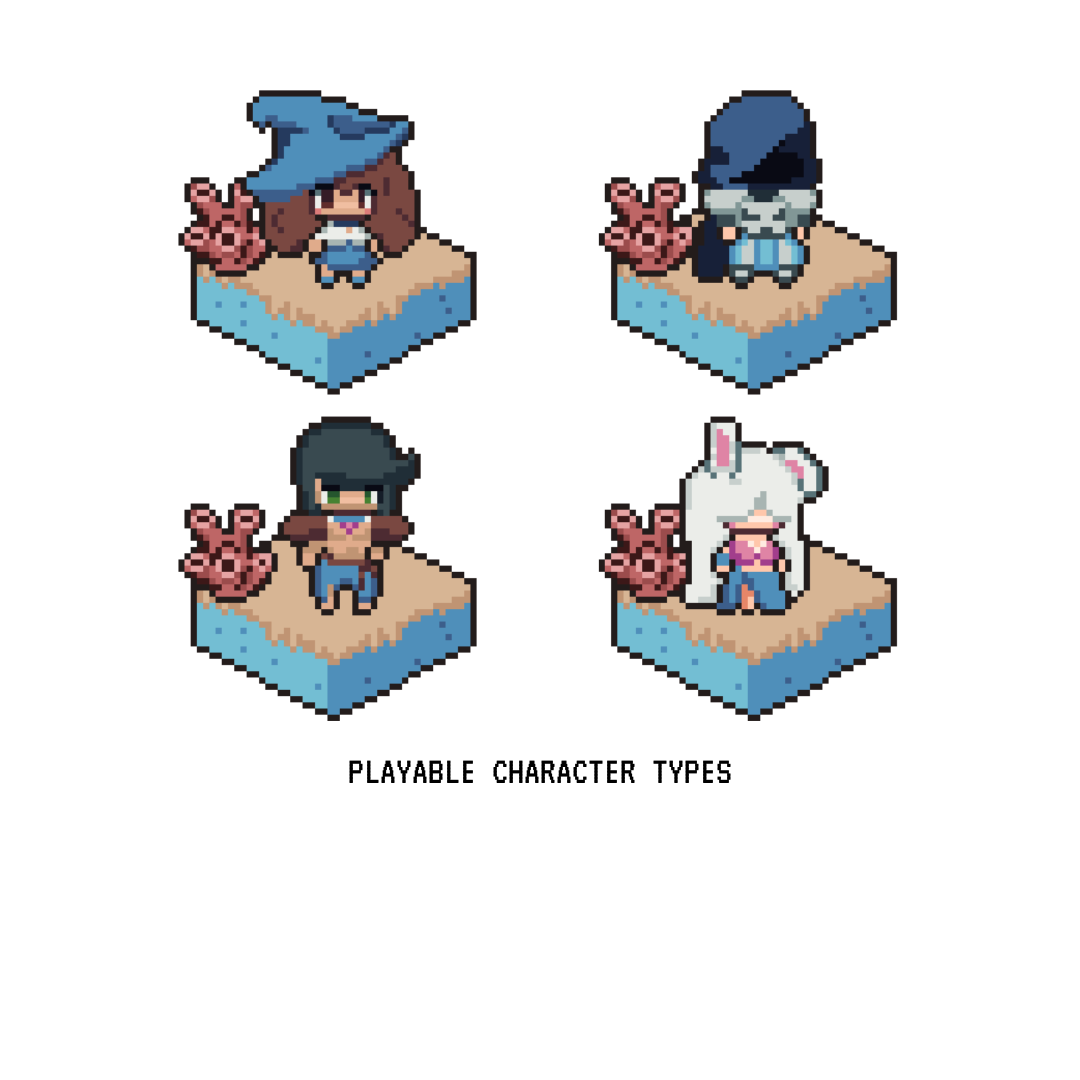
A playable character
-
![]()
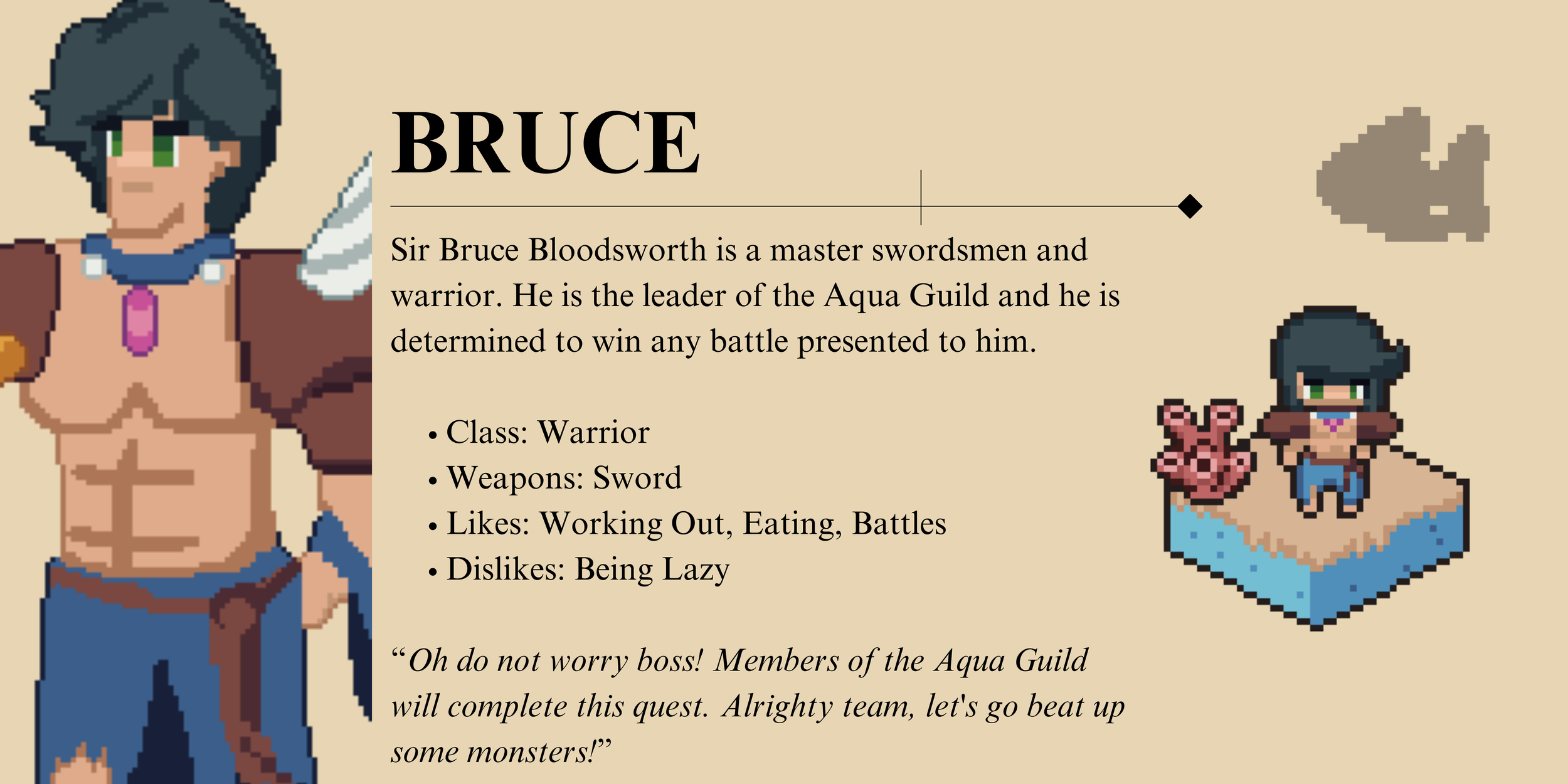
Bruce Character Card
A playable character
-
![]()
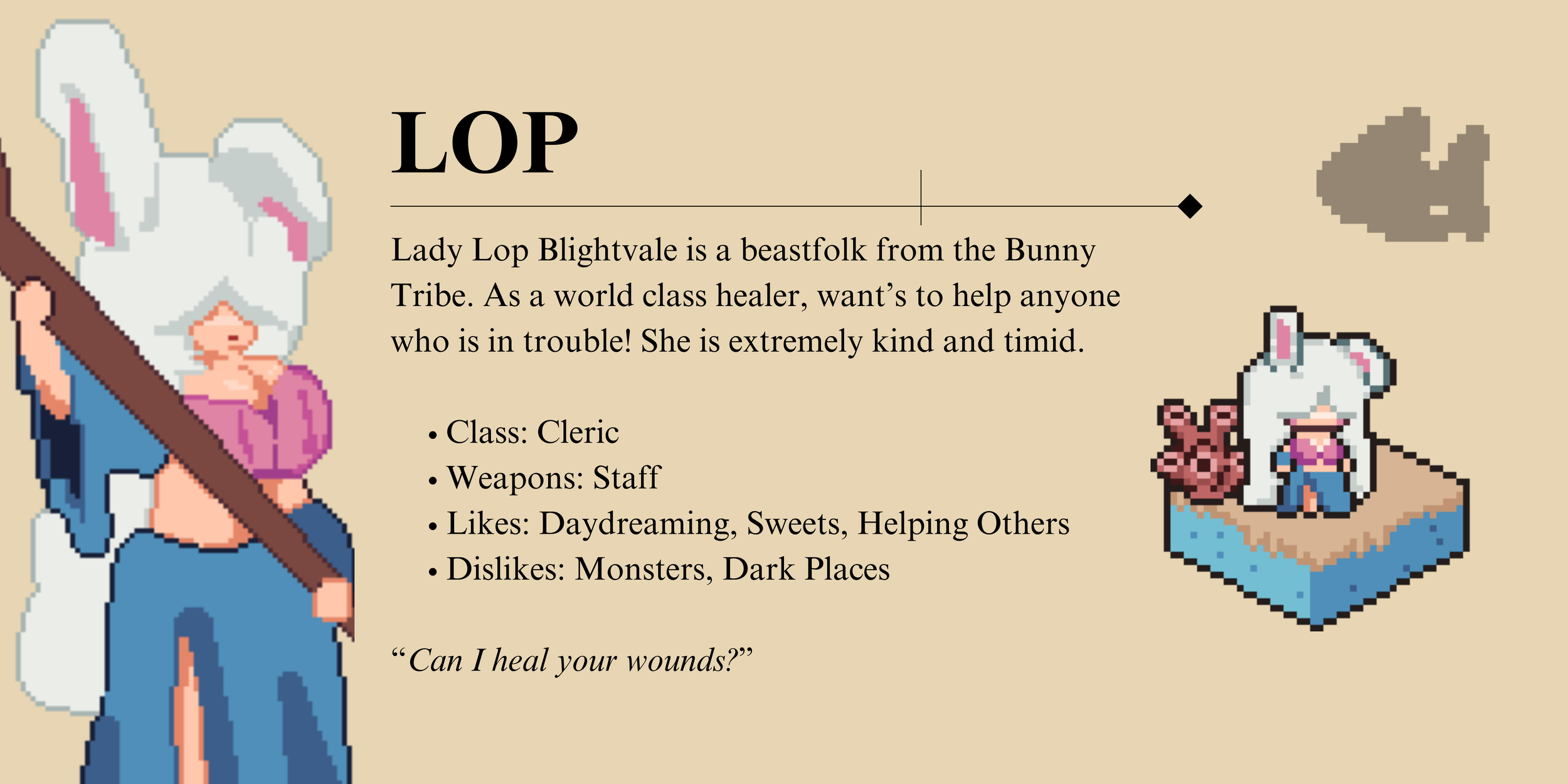
Lop Character Card
A playable character
-
![]()
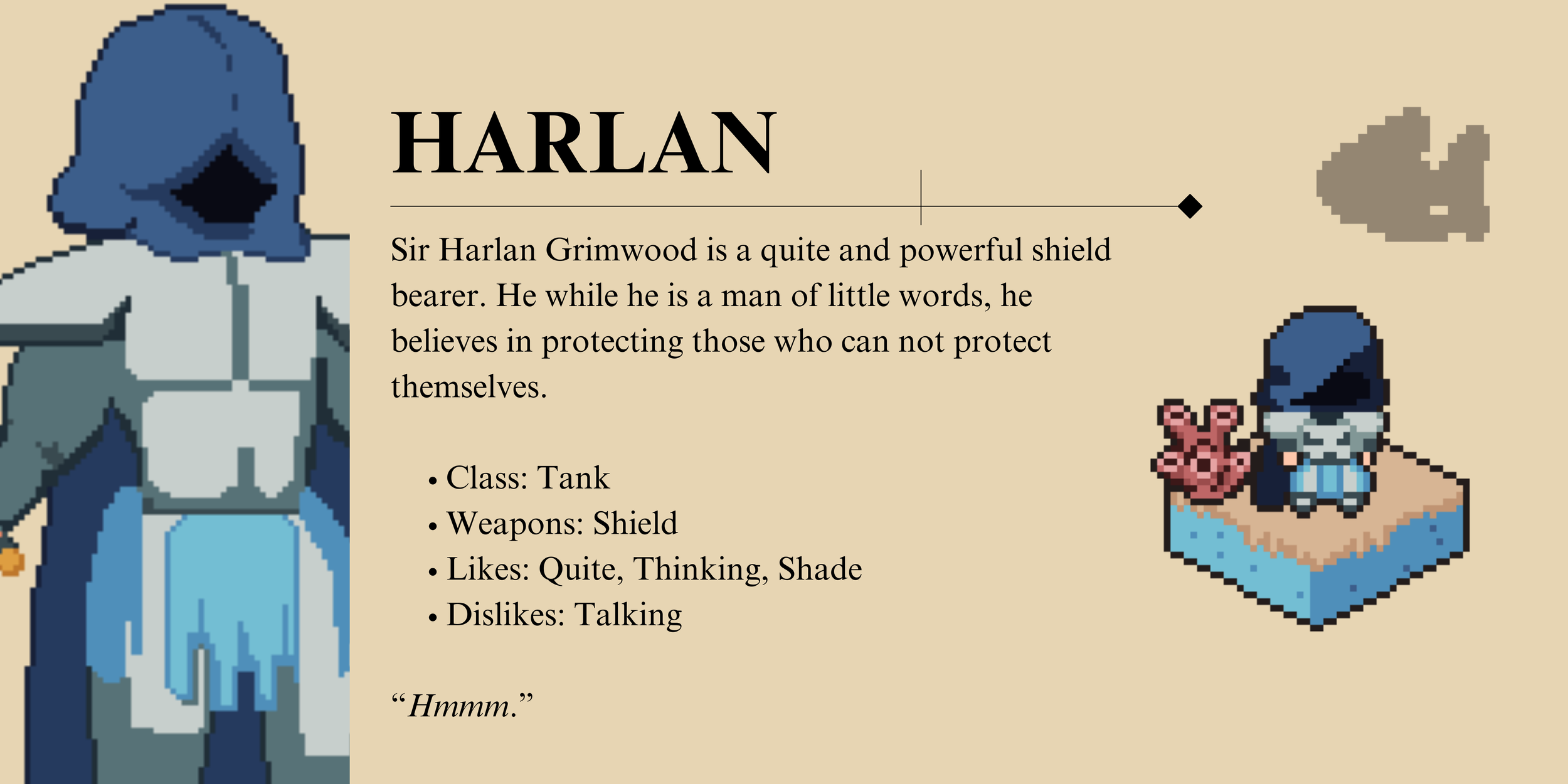
Harlan Character Card
A playable character

DESIGN CONCEPTS
In this section, I will discuss my design concept through perspective of a player which includes, game mechanics, enemy behavior, and progression.
The Player Experience
WHAT INSPIRED THE GAME DESIGN
EXPLORATION: For this game, we wanted to provide a traditional RPG experience where players could explore a large environment filled with meaningful choices. Whether they choose to face monsters, search for treasure chests, or level up their character, we wanted to give players the freedom to explore the world while encouraging them to have a sense of purpose behind their decisions.
GAIN LEVELS, UNLOCK SKILLS: As the player continues deeper into the dungeon, they will encounter higher level enemies and eventually face a powerful boss. The risk of exploring deeper is that players may lose the game if they are not properly prepared. To encourage preparation, we provided opportunities for players to unlock new skills for each character, helping them build a stronger team and successfully clear the dungeon.
JOB SPECIALITIES: Traditional RPGs often provide players with different jobs or classes to explore. To capture that experience within our project’s scope, we decided to focus on four iconic classes: Mage, Warrior, Cleric, and Tank. Each character was also given unique voice lines and personality traits to help distinguish them and make each character feel more memorable.
PLAYER SKILLS & ACTIONS
MOVEMENT
Arrow Keys / WASD: Movement and turning
Spacebar / Enter: Confirm menu selection, advance dialogue
ESCAPE: Toggle main system menu, return to previous menu
ABILITIES/SKILLS: Each character has their own special “ability” which is unique to the combat experience.
Mage Ability: Magic [uses MP to cast powerful spells]
Warrior Ability: Insight [informs the player about the HP of the monster]
Cleric Ability: Mircale [use MP to cast powerful recovery spells]
Tank Ability: Taunt [causes enemy to focus attacks on this specific character]
PLAYER SUPPORT ITEMS
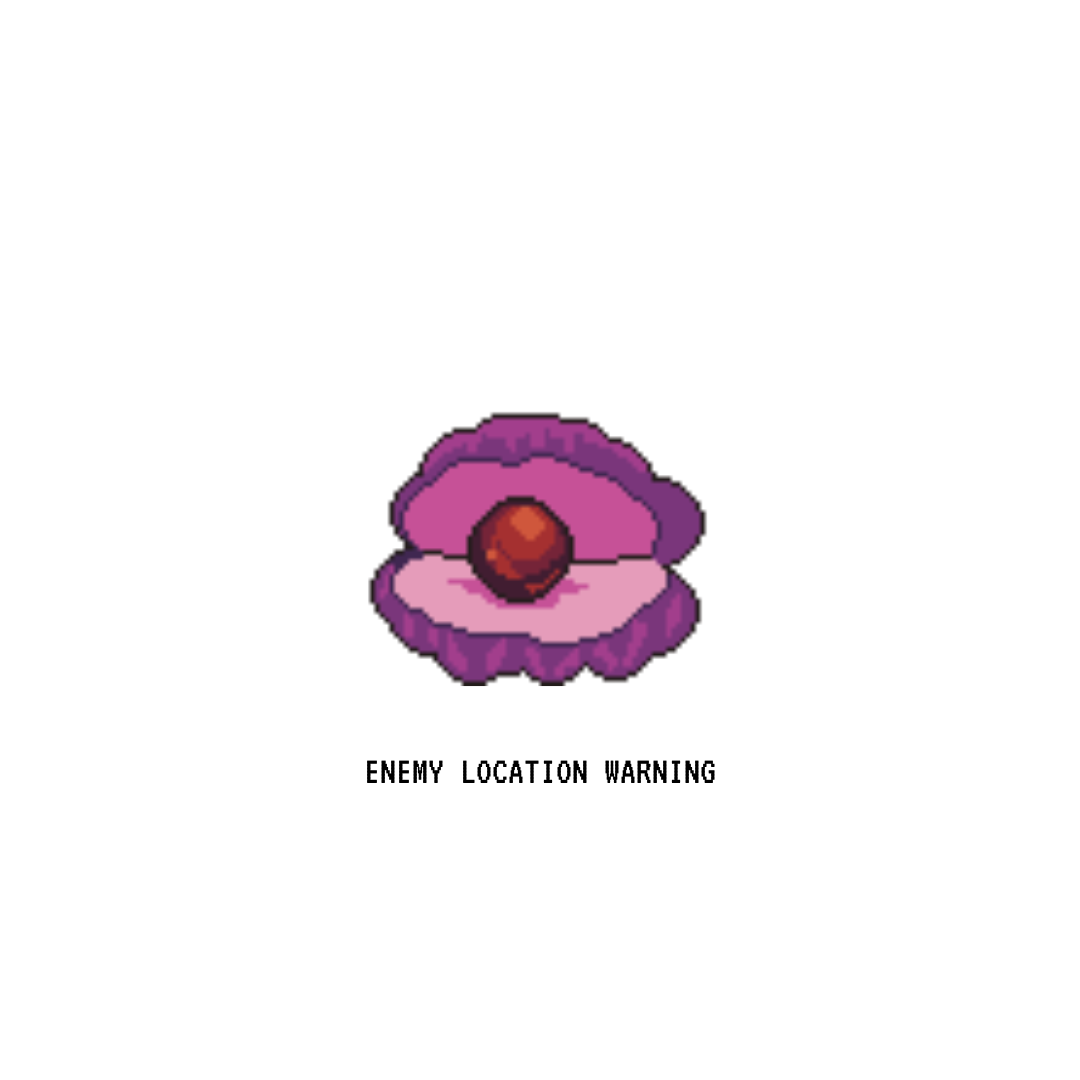
SHELL OF SIGNALS:
Beyond providing a map for the player, we also wanted to create a sense of guidance and awareness within the dungeon. Since the dungeon contains difficult enemies, we added a key UI indicator that alerts the player when they are approaching an enemy. This allows players to prepare before entering combat by using a potion or healing skill if any of their characters are low on health.
WHAT INSPIRED THE GAME
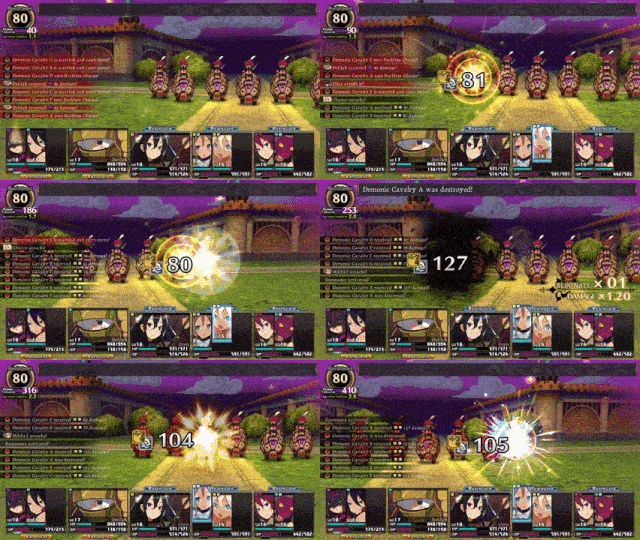
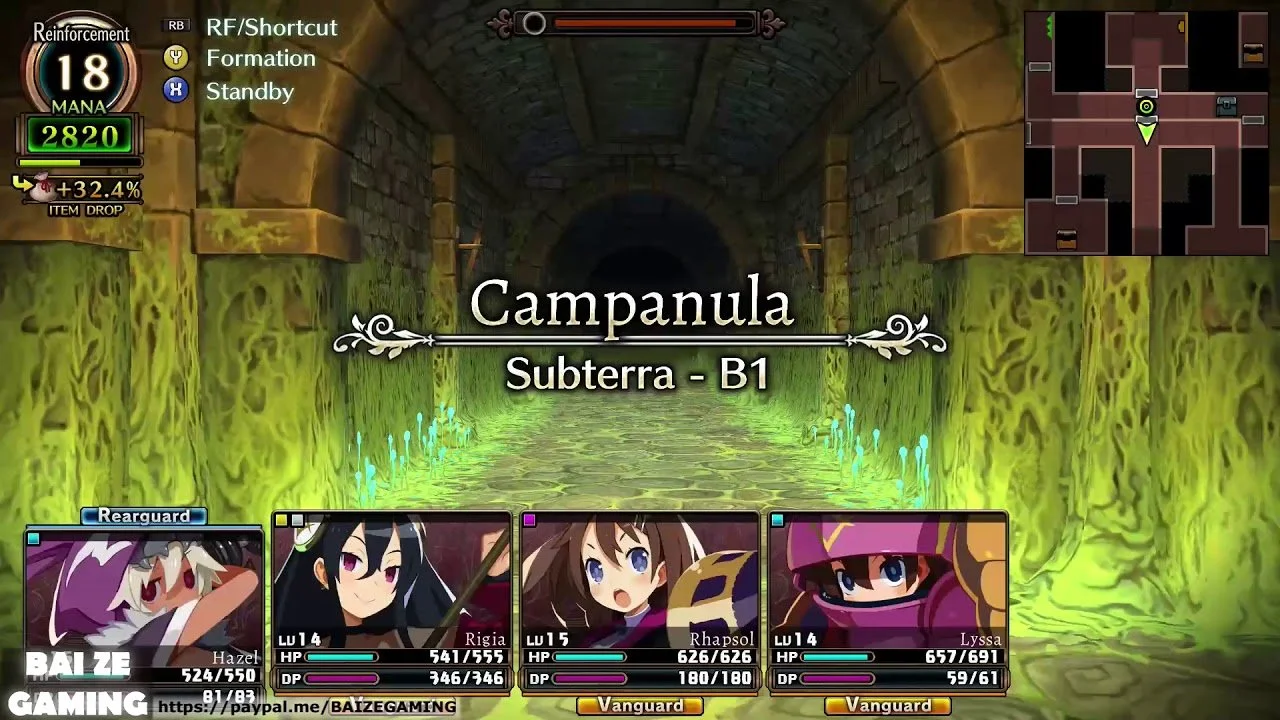
LABYRINTH GAMES: Classical dungeon-crawling games such as Labyrinth of Refrain and Etrian Odyssey played a major role in shaping the style and overall feel of our game. Exploration is a key aspect of this genre, and we wanted to build on that foundation by making exploration an important part of our own gameplay experience.
KEY DIFFERENCES: Traditionally, RPG games introduce and unlock new characters at different points throughout the story. Since this game was created as a demo and game jam project, we wanted to streamline that process by creating a story where the characters had already met and formed a team. We also modified how abilities and skills were accessed to ensure that each character had a clear purpose within the team.
The Game References
Lessons Learned
-
Being invited to support a friend was a great experience as it allowed me to explore a new genre. With that said, I have never played a dungeon crawler game. The first tasks I did was play and understand the fundamentals of a first-person dungeon crawlers. Using games such as Labyrinth of Refrain: Coven of Dusk, I began mapping the priorities of character profiles, tiles, and overall UX experience.